My hoby is playing games, sports, and watching movie. My favourite games is AC3 (Assassin's Creed 3), Naruto, AQ Worlds (Adventure Quest Worlds), and other fantasy games. My favourite movie is Anime and cartoon, in Anime i like Naruto, FT (Fairy Tail), Beelzebub, Bleach, Detective Conan, Death Note. My favourite sport is football but, i'm not really good at it. :)
Thursday, April 18, 2013

Thursday, April 11, 2013
Assassin's Creed IV: Black Flag is an upcoming action-adventure open world video game being developed by Ubisoft Montreal and published by Ubisoft.[2] It is the sixth major installment in the Assassin's Creed series and a sequel to 2012's Assassin's Creed III modern story and a prequel to its ancestral storyline.
Characters
The main character of the game will be Edward Kenway, a British pirate and member of the Assassin Order; father of Haytham Kenway, and grandfather of Ratonhnhaké:ton (Connor), the two playable characters of Assassin's Creed III. Real-life individuals that will be encountered include the pirates Blackbeard, Benjamin Hornigold, Anne Bonny, Calico Jack and Charles Vane.[2]The PlayStation 3 (Japanese: プレイステーション3 Hepburn: Pureisutēshon Surī, officially abbreviated as PS3[7]) is a home video game console produced by Sony Computer Entertainment. It is the successor to the PlayStation 2, as part of the PlayStation series. The PlayStation 3 competes with Microsoft's Xbox 360 and Nintendo's Wii as part of the seventh generation of video game consoles. It was first released on November 11, 2006, in Japan,[8] with international markets following shortly thereafter.[9][10][11]
The console was first officially announced at E3 2005. Originally set
for a spring 2006 release date, it was delayed several times until
finally hitting stores at the end of the year. It was the first and
currently only console to use Blu-ray Disc as its primary storage medium.[12] Major features of the console include its unified online gaming service, the PlayStation Network,[13] and its[14] connectivity with the PlayStation Portable and PlayStation Vita,[15] In September 2009 the updated PlayStation 3 Slim, was released. This Slim is lighter and thinner than the original version, although it lacks PlayStation 2 backwards compatibility
(removed on later original models), but notably featured a re-designed
logo and marketing design. As of November 4, 2012, 70 million
PlayStation 3s have been sold worldwide. Its successor, PlayStation 4, is set for a Q4 2013 release.
Assassin's Creed III is a 2012 action-adventure video game developed by Ubisoft Montreal and published by Ubisoft for PlayStation 3, Xbox 360, Wii U, and Microsoft Windows. It is the fifth major installment in the Assassin's Creed series, and a direct sequel to 2011's Assassin's Creed: Revelations.
The game was released worldwide for PlayStation 3 and Xbox 360,
beginning in North America on October 30, 2012, with a Wii U and
Microsoft Windows release following in November 2012.
The plot is set in a fictional history of real world events and follows the centuries old struggle between the Assassins, who fight for peace with free will, and the Templars, who desire peace through control. The framing story is set in the 21st century and features series protagonist Desmond Miles who, with the aid of a machine known as the Animus, relives the memories of his ancestors to find a way to avert the 2012 apocalypse. The story proper is set in the 18th century, before, during and after the American Revolution from 1753 to 1783, and follows Desmond's half-English, half-Mohawk ancestor, Ratonhnhaké:ton (pron.: /ˈrəduːnˈhəɡeɪduːn/; "Ra-doon-ha-gay-doon"), also known as Connor, as he fights the Templars' attempts to gain control of the newly forming nation.
Assassin's Creed III is set in an open world and presented from the third-person perspective
with a primary focus on using Desmond and Connor's combat and stealth
abilities to eliminate targets and explore the environment. Connor is
able to freely explore 18th-century Boston, New York and the American
frontier to complete side missions away from the primary storyline. The
game also features a multiplayer component, allowing players to compete
online to complete solo and team based objectives including
assassinations and evading pursuers. Ubisoft developed a new game
engine, Anvil Next, for the game.[11] The game was met with positive reviews and has sold 12 million copies worldwide.
A prequel to the game titled Assassin's Creed IV: Black Flag
was announced in early 2013, and is set to follow Connor's grandfather -
Edward Kenway - a privateer and pirate in the Caribbean.[12]
Thursday, April 4, 2013
Computer
Before laptop/notebook computers were technically feasible, similar ideas had been proposed, most notably Alan Kay's Dynabook concept, developed at Xerox PARC in the early 1970s. What was probably the first portable computer was the Xerox NoteTaker, again developed at Xerox PARC, in 1976. However, only 10 prototypes were built.
Osborne1

The first mass-produced microprocessor-based portable computer was the Osborne 1 in 1981, which used the CP/M operating system. Although it was large and heavy compared to today's laptops, with a tiny 5" CRT monitor, it had a near-revolutionary impact on business, as professionals were able to take their computer and data with them for the first time. This and other "luggables" were inspired by what was probably the first portable computer, the Xerox NoteTaker. The Osborne was about the size of a portable sewing machine, and more importantly, could be carried on commercial aircraft.
[edit]Bondwell 2
Although it wasn't released until 1985, well after the decline of CP/M as a major operating system, the Bondwell 2 is one of only a handful of CP/M laptops. It used a Z-80 CPU running at 4 MHz, had 64 K RAM and, unusual for a CP/M machine, a 3.5" floppy disk drive built in. It had a 80×25 character-based LCD mounted on a hinge similar to modern laptops, one of the first computers to use this form factor.
[edit]Other CP/M laptops
The other CP/M laptops were the Epson PX-4 (or HX-40) and PX-8 (Geneva), The NEC PC-8401A, and the NEC PC-8500. These four units, however, utilized modified CP/M systems in ROM, and did not come standard with any floppy or hard disks.
[edit]Compaq Portable
A more enduring success was the Compaq Portable, the first product from Compaq, introduced in 1983, by which time the IBM Personal Computer had become the standard platform. Although scarcely more portable than the Osborne machines, and also requiring AC power to run, it ran MS-DOS and was the first true legal IBM clone (IBM's own later Portable Computer, which arrived in 1984, was notably less IBM PC-compatible than the Compaq[citation needed]
[edit]Epson HX-20
Another significant machine announced in 1981, although first sold widely in 1983, was the Epson HX-20. A simple handheld computer, it featured a full-transit 68-key keyboard, rechargeablenickel-cadmium batteries, a small (120×32-pixel) dot-matrix LCD display with 4 lines of text, 20 characters per line text mode, a 24 column dot matrix printer, a Microsoft BASIC interpreter, and 16 KB of RAM (expandable to 32 KB).
[edit]GRiD Compass
However, arguably the first true laptop was the GRiD Compass 1101, designed by Bill Moggridge in 1979-1980, and released in 1982. Enclosed in a magnesium case, it introduced the now familiar clamshell design, in which the flat display folded shut against the keyboard. The computer could be run from batteries, and was equipped with a 320×200-pixel electroluminescent displayand 384 kilobyte bubble memory. It was not IBM-compatible, and its high price (US$8,000–10,000) limited it to specialized applications. However, it was used heavily by the U.S. military, and byNASA on the Space Shuttle during the 1980s. The GRiD's manufacturer subsequently earned significant returns on its patent rights as its innovations became commonplace. GRiD Systems Corp. was later bought by the Tandy (now RadioShack) Corporation.
[edit]Dulmont Magnum/Kookaburra
Another contender for the first true laptop was the Dulmont Magnum, designed Barry Wilkinson and Terry Crews Engineering Manager at Dulmison in 1982 and released in Australia in 1983 It included an 8x80 display in a lid that closed against the keyboard. It was based on the MS-DOS operating system and applications stored in ROM (A:) and also supported removable modules in expansion slots (B: and C:) that could be custom programmed EPROM or standard word processing and spreadsheet applications. However, the Magnum had no nonvolatile memory, but could suspend and retain memory in RAM, including a RAM Disk (D:). A separate expansion box provided dual 5.25" floppy or 10MB hard disk storage. Dulmont was eventually taken over by Time Office Computers, who marketed the Magnum internationally in 16 and 25 line LCD versions, and also introduced the brandname Kookaburra to emphasize its Australian origins.
[edit]Ampere
The Ampere,[1] a sleek clamshell design by Ryu Oosake, also made in 1983. It offered a MC68008 microprocessor dedicated to running an APL interpreter residing in ROM.
[edit]Tandy Model 100
The TRS-80 Model 100 was an early portable computer introduced in 1983. It was one of the first notebook-style computers, featuring a keyboard and LCD display, battery powered, in a package roughly the size and shape of notepad or large book.
It was made by Kyocera, and originally sold in Japan as the Kyotronic 85. Although a slow seller for Kyocera, the rights to the machine were purchased by Tandy Corporation, and the computer was sold through Radio Shack stores in the United States and Canada as well as affiliated dealers in other countries, becoming one of the company's most popular models, with over 6,000,000 units sold worldwide. The Olivetti M-10 and the NEC PC-8201 and PC-8300 were also built on the same Kyocera platform.
[edit]Sharp and Gavilan
Two other noteworthy early laptops were the Sharp PC-5000 and the Gavilan SC, announced in 1983 but first sold in 1984. The Gavilan was notably the first computer to be marketed as a "laptop". It was also equipped with a pioneering touchpad-like pointing device, installed on a panel above the keyboard. Like the GRiD Compass, the Gavilan and the Sharp were housed in clamshell cases, but they were partly IBM-compatible, although primarily running their own system software. Both had LCD displays, and could connect to optional external printers. The Dulmont Magnum, launched internationally in 1984, was an Australian portable similar in layout to the Gavilan, which used the Intel 80186 processor.[2]
[edit]Kyotronic 85
The year 1983 also saw the launch of what was probably the biggest-selling early laptop, the Kyocera Kyotronic 85. Owing much to the design of the previous Epson HX-20, and although at first a slow seller in Japan, it was quickly licensed by Tandy Corporation, Olivetti, and NEC, who recognised its potential and marketed it respectively as the TRS-80 Model 100 line (or Tandy 100),Olivetti M-10, and NEC PC-8201.[3] The machines ran on standard AA batteries. The Tandy's built-in programs, including a BASIC interpreter, a text editor, and a terminal program, were supplied by Microsoft, and are thought to have been written in part by Bill Gates himself. The computer was not a clamshell, but provided a tiltable 8 line × 40-character LCD screen above a full-travel keyboard. With its internal modem, it was a highly portable communications terminal. Due to its portability, good battery life (and ease of replacement), reliability (it had no moving parts), and low price (as little as US$300), the model was highly regarded, becoming a favorite among journalists. It weighed less than 2 kg with dimensions of 30×21.5×4.5 centimeters (12×8½×1¾ in). Initial specifications included 8 kilobytes of RAM (expandable to 24 KB) and a 3 MHz processor. The machine was in fact about the size of a paper notebook, but the term had yet to come into use and it was generally described as a "portable" computer.
[edit]Commodore SX-64
The Commodore SX-64, also known as the Executive 64, or VIP-64 in Europe, was a portable, briefcase or suitcase-size "luggable" version of the popular Commodore 64 home computer, and was the first full-color portable computer.[4]
The SX-64 featured a built-in five-inch composite monitor and a built-in 1541 floppy drive. It weighed 20 pounds The machine was carried by its sturdy handle, which doubled as an adjustable stand. It was announced in January 1983 and released a year later, at $995 USD.[5]
[edit]Kaypro 2000
Possibly the first commercial IBM-compatible laptop was the Kaypro 2000, introduced in 1985. With its brushed aluminum clamshell case, it was remarkably similar in design to modern laptops. It featured a 25 line by 80 character LCD display, a detachable keyboard, and a pop-up 90 mm (3.5 inch) floppy drive.
[edit]IBM PC Convertible
Also among the first commercial IBM-compatible laptops was the IBM PC Convertible, introduced in 1986. It had a CGA-compatible LCD display and 2 floppy drives. It weighed 13 lbs.
[edit]Toshiba T1100, T1000, and T1200
Toshiba launched the Toshiba T1100 in 1985, and has subsequently described it as "the world's first mass-market laptop computer".[6] It did not have a hard drive, and ran entirely from floppy disks. The CPU was a 4.77 MHz Intel 80C88, a variation of the popular Intel 8088, and the display was a monochrome, text-only 640x200 LCD. It was followed in 1987 by the T1000 and T1200. Although limited floppy-based DOS machines, with the operating system stored in ROM, the Toshiba models were small and light enough to be carried in a backpack, and could be run from lead-acid batteries. They also introduced the now-standard "resume" feature to DOS-based machines: the computer could be paused between sessions without having to be restarted each time.
[edit]US Air Force
The first laptops successful on a large scale came in large part due to a Request For Proposal (RFP) by the U.S. Air Force in 1987. This contract would eventually lead to the purchase of over 200,000 laptops. Competition to supply this contract was fiercely contested and the major PC companies of the time; IBM Corporation, Toshiba, Compaq, NEC, and Zenith Data Systems (ZDS), rushed to develop laptops in an attempt to win this deal. ZDS, which had earlier won a landmark deal with the IRS for its Z-171, was awarded this contract for its SupersPort series. The SupersPort series was originally launched with an Intel 8086 processor, dual floppy disk drives, a backlit, blue and white STN LCD screen, and a NiCd battery pack. Later models featured an Intel 80286 processor and a 20 MB hard disk drive. On the strength of this deal, ZDS became the world's largest laptop supplier in 1987 and 1988. ZDS partnered with Tottori Sanyo in the design and manufacturing of these laptops. This relationship is notable because it was the first deal between a major brand and an Asian original equipment manufacturer.
[edit]Cambridge Z88
Another notable computer was the Cambridge Z88, designed by Clive Sinclair, introduced in 1988. About the size of an A4 sheet of paper as well, it ran on standard batteries, and contained basicspreadsheet, word processing, and communications programs. It anticipated the future miniaturization of the portable computer, and as a ROM-based machine with a small display, can — like the TRS-80 Model 100 — also be seen as a forerunner of the personal digital assistant.
[edit]Compaq SLT/286
By the end of the 1980s, laptop computers were becoming popular among business people. The COMPAQ SLT/286 debuted in October 1988, being the first battery-powered laptop to support an internal hard disk drive and a VGA compatible LCD screen. It weighed 14 lbs.[7]
[edit]NEC UltraLite
The NEC UltraLite, released in mid-1989, was perhaps the first notebook computer, weighing just over 2 kg (4.4 lbs). In lieu of a floppy or hard drive, it contained a 2 megabyte RAM drive, but this reduced its utility as well as its size. Although portable computers with clamshell LCD screens already existed before it, the Ultralite was the first computer in a notebook form-factor. It was significantly smaller than all portable computers that came before it. People can actually carry-it like a notebook and fold its clamshell LCD like a book cover over the rest of its body.
[edit]Apple
[edit]Macintosh Portable

The first Apple Computer machine designed to be used on the go was the 1989 Macintosh Portable (although an LCD screen had been an option for the transportable Apple IIc in 1984). Unlike the Compaq LTE laptop released earlier in the year the Macintosh Portable was actually a "luggable" not a laptop, but the Mac Portable was praised for its clear active matrix display and long battery life, but was a poor seller due to its bulk. In the absence of a true Apple laptop, several compatible machines such as the Outbound Laptop were available for Mac users; however, for copyright reasons, the user had to supply a set of Mac ROMs, which usually meant having to buy a new or used Macintosh as well.
[edit]Powerbook
The Apple PowerBook series, introduced in October 1991, pioneered changes that are now de facto standards on laptops, such as room for a palm rest, and the inclusion of a pointing device (a trackball). The following year, IBM released its ThinkPad 700C, featuring a similar design (though with a distinctive red TrackPoint pointing device).
Later PowerBooks featured optional color displays (PowerBook 165c, 1993), and first true touchpad (PowerBook 500 series, 1994), first 16-bit stereo audio, and first built-in Ethernet network adapter (PowerBook 500, 1994).
[edit]IBM RS/6000 N40
In 1994, IBM released the RS/6000 N40 laptop based on a PowerPC microprocessor running the AIX operating system, a variant of UNIX. It was manufactured by Tadpole Technology (now Tadpole Computer), who also manufactured laptops based on SPARC and Alpha microprocessors, the SPARCbook and ALPHAbook lines, respectively.
[edit]Windows 95 operating system
The summer of 1995 was a significant turning point in the history of notebook computing. In August of that year Microsoft introduced Windows 95. It was the first time that Microsoft had implemented the advanced power management specification with control in the operating system. Prior to this point each brand used custom BIOS, drivers and in some cases, ASICs, to optimize the battery life of its machines. This move by Microsoft was controversial in the eyes of notebook designers because it greatly reduced their ability to innovate; however, it did serve its role in simplifying and stabilizing certain aspects of notebook design.
[edit]Intel Pentium processor
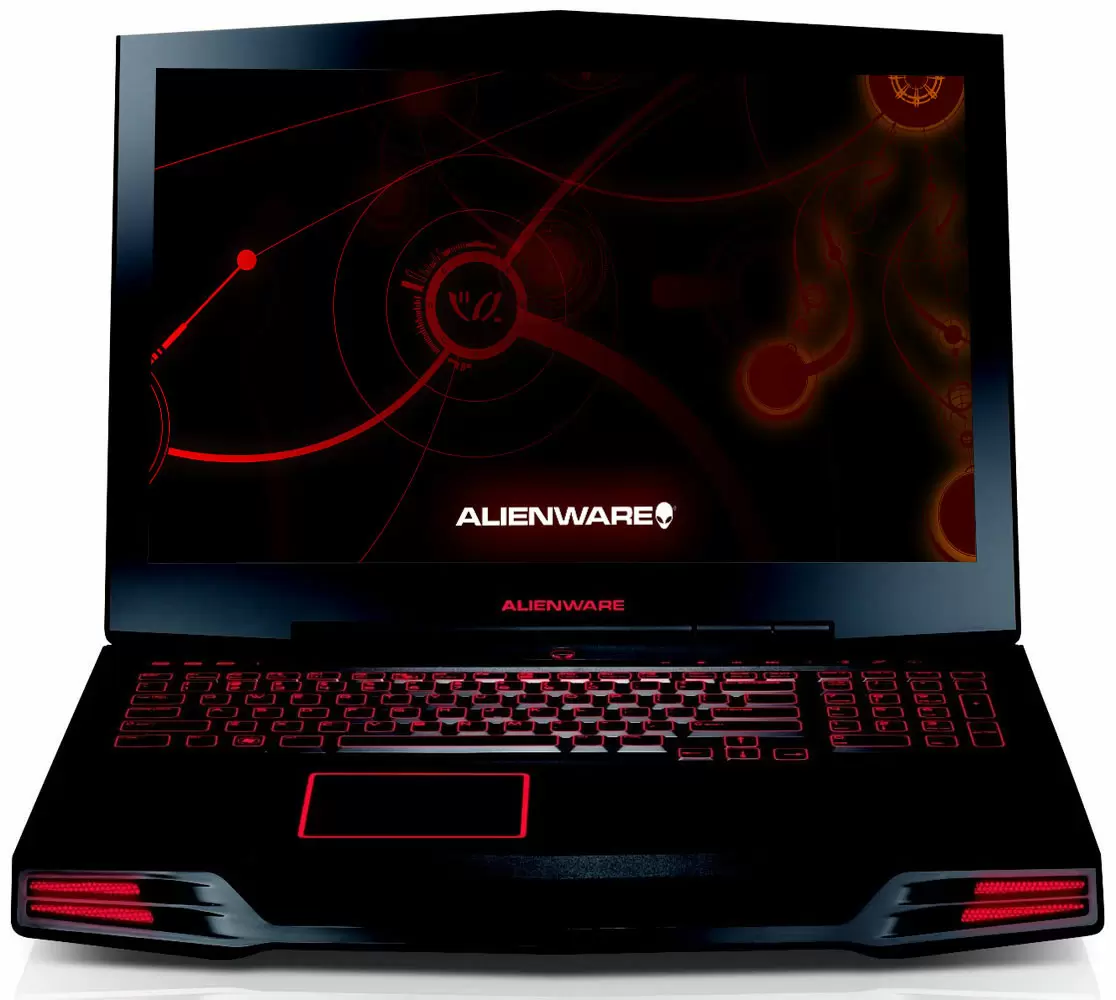
Windows 95 also ushered in the importance of the CD-ROM drive in mobile computing, and initiated the shift to the Intel Pentium processor as the base platform for notebooks. The Gateway Solo was the first notebook introduced with a Pentium processor and a CD-ROM. Also featuring a removable hard disk drive and floppy drive, the Solo was the first three-spindle (optical, floppy, and hard disk drive) notebook computer, and was extremely successful within the consumer segment of the market. In roughly the same time period the Dell Latitude, Toshiba Satellite, and IBM ThinkPad were reaching great success with Pentium-based two-spindle (hard disk and floppy disk drive) systems directed toward the corporate market.
Saturday, March 23, 2013
Hai, namaku Sandy, aku adalah anak laki-laki. Aku beragama Islam, aku bersekolah di Mutiara Harapan Islamic Bilingual School. game kesukaan ku adalah Assassin's Creed, Point Blank, AQ Worlds, DLL. Anime kesukaan ku adalah Naruto, fairy tail, bleach, DLL. aku mempunyai 2 kakak laki-laki, 1 adek perempuan dan 1 adek laki laki. Film kesukaan ku adalah anime dan kartun
Subscribe to:
Posts (Atom)

